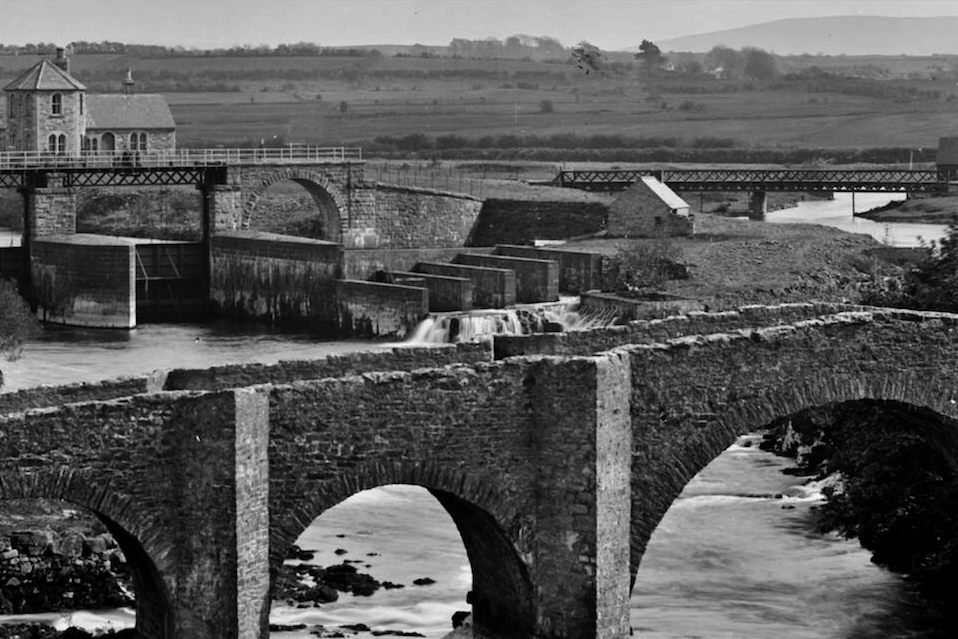
The Erne Scheme

For a number of years in Ireland generally employment for young men and women was hard to find. In rural areas on two times a year in conjunction with the cattle fairs in selected towns were included ‘Hiring fairs’. In attendance were land owners and young people looking for work who paraded along the street and very viewed by land owners. Persons were hired for a period of six months for a sum of about £6-0-0 . Accommodation on the farm was most basic, usually the person slept in the barn or in a loft. Meals were reasonable. Some ruthless land owners made life so difficult in the final month or so that the young person was forced to leave before their term was up and so forfeited their wages. Employees endeavoured to make enough money to pay their way to America, England or Scotland. The first break in the system in this area came during World War 2 for young men came, with employment on the aerodromes being built on Lough Erne. Unskilled labourers were paid between 4 and 5 pounds a week. Skilled tradesmen earned much more. Following the successful hydro-electric schemes on the Rivers Liffey and Shannon the Free State Government planned do the same on the Erne. It received limited assistance from the N. Ireland Government. Major unionist land owners in East Fermanagh would have their acreage considerable increased as the river had to be drained to give an adequate supply of water to drive the turbines in the two power stations at Cliff and Cathleen’s Falls. The drainage lowered the level of the lake by about two feet. When finished here the Cementation Company were awarded similar contracts in Wales. Many local men went over there and remained with the company.

Cementation

The Cementation Company, based in England were awarded the contract to build two power stations on the River Erne. This created a lot of employment for men skilled and unskilled. For the unskilled the weekly wage was about £5.00, skilled tradesmen earned £10.00, this could be increased with overtime and shift work. Many women were employed as office staff. The days of cheap slave labour for big farmers had come to an end.

The creation of two artificial damns meant that large areas of land was flooded and many dwellings. The owners were compensated and re-located. To ensure the damns would contain the huge amount of water vast amounts of cement was injected into the banks of the damns.

The Cementation Company were experts in this method of sealing the damns, hence their name. To ensure the necessary supply of water to power the turbines the actual River Erne from Belleek to Lower Lough Erne a distance of over three miles was drained. The Cementation Company being on site were awarded the contract.

Many local people objected to the Erne Scheme being carried out and the loss of so many acres of excellent agricultural land and fine houses. It also meant that the river was no longer suitable for salmon fishing.

The views of those people is best expressed in a poem compiled by a local.


THE VOICE OF THE RIVER ERNE

It is a long way back that I am gazing
The Erne has changed since then
Oh! Memory – that midway world
Between Earth and Paradise
Where things decayed and loved ones lost
Now in dreary shadows rise
Before the engineers straightened out
The Winding banks of Erne.
And silenced forever the VOICE of the River Erne.